How we restored a Victorian rug from Portobello Road
A Victorian rug from Portobello Road is not just a floor covering. It is a bit of history, a bit of craftsmanship, and, sometimes, a bit of a headache if it has spent years collecting dust, footfall, sunlight, or an old spill that no one quite remembers. In this guide, we're walking through how we restored a Victorian rug from Portobello Road, what made the job delicate, and why the right approach matters so much when you are dealing with an antique textile rather than an ordinary rug.
If you have ever picked up a rug from a market and thought, "It looks beautiful, but what now?", you are in the right place. We'll cover the restoration process in plain English, explain the main risks, and show you how to judge whether a rug needs gentle cleaning, repair work, or a more specialist conservation approach. To be fair, that distinction is where many people get caught out.
Table of Contents
- Why How we restored a Victorian rug from Portobello Road Matters
- How How we restored a Victorian rug from Portobello Road Works
- Key Benefits and Practical Advantages
- Who This Is For and When It Makes Sense
- Step-by-Step Guidance
- Expert Tips for Better Results
- Common Mistakes to Avoid
- Tools, Resources and Recommendations
- Law, Compliance, Standards, or Best Practice
- Options, Methods, or Comparison Table
- Case Study or Real-World Example
- Practical Checklist
- Conclusion
- Frequently Asked Questions
Why How we restored a Victorian rug from Portobello Road Matters
Restoring an antique rug is not the same as freshening up a modern synthetic one. A Victorian rug may have hand-knotted fibres, vegetable or early synthetic dyes, hand-finishing, and wear patterns that tell you more than just "old and dirty". It may have been walked on in a hallway for decades, folded badly in storage, or exposed to damp in a London property where the windows never quite stopped rattling in winter. You notice these things very quickly once you begin.
Portobello Road adds another layer of interest. Rugs sold there often come with a bit of character and, sometimes, an incomplete story. That means the restoration process has to respect both the object and its unknown history. If you clean aggressively, you may strip the colours, disturb the pile, or worsen weak seams. If you do too little, dirt and grit keep grinding into the fibres. Neither outcome is ideal.
The real value of this kind of work lies in preserving what is already there. A well-restored Victorian rug can sit beautifully in a period home, a flat in Notting Hill, or a room that needs one genuinely distinctive feature. And because antique textiles can be fragile, getting the process right is more than a cosmetic concern. It is preservation.
Expert summary: With antique rugs, the goal is not to make them look brand new. The goal is to stabilise, clean, protect, and improve the rug without erasing the signs of age that make it valuable in the first place.
How How we restored a Victorian rug from Portobello Road Works
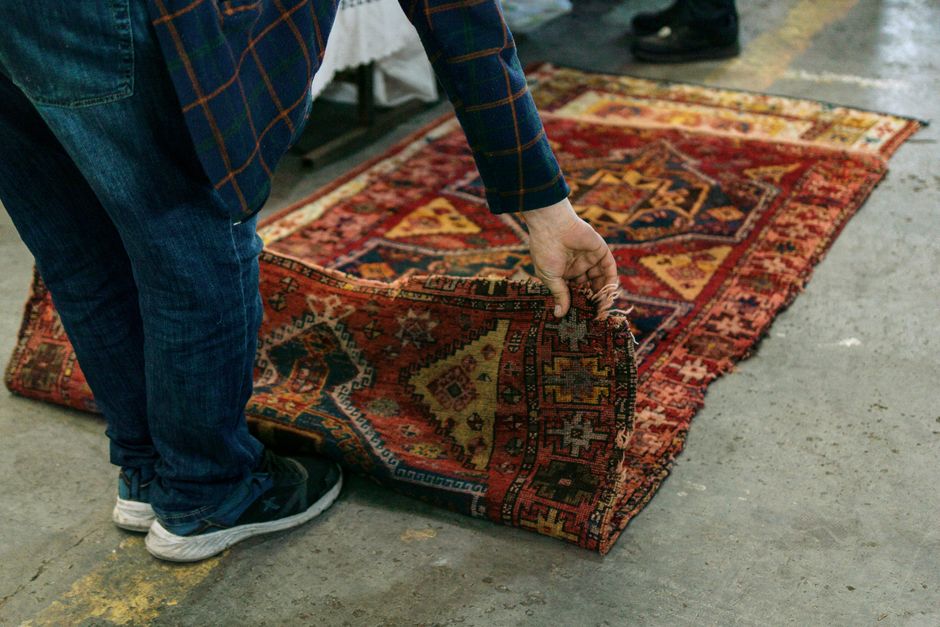
The restoration process usually starts with assessment, not washing. That part matters more than people think. First, we look at fibre type, dye stability, edge condition, wear, and any previous repairs. Then we test small areas before doing anything more ambitious. It sounds cautious because it is. A Victorian rug can react very differently depending on whether the wool has become brittle, whether the dyes are stable, or whether previous repairs were done with unsuitable thread.
After inspection, the rug is usually dusted and cleaned in stages. Dry soil is removed first, because loose grit can act like sandpaper during wet cleaning. The next stage depends on the rug's condition. Some rugs can tolerate a careful wash with controlled moisture, while others need spot treatment and very limited intervention. If there are frayed edges, weak backing, or splits in the weave, repair work may be needed before or after cleaning. Sometimes both. Yes, it can be a bit fiddly.
Drying and finishing are just as important as washing. A rug that dries unevenly can ripple, distort, or develop a stiff hand. So we dry it flat, in a controlled environment, and then finish it by grooming the pile, checking the borders, and making sure the piece lies correctly. The final result should feel balanced, not overly processed.
If you are comparing restoration with more general cleaning, it helps to think of it this way: cleaning removes dirt, restoration addresses condition. The overlap is real, but the intent is different. For related textile care, our rug cleaning service explains the day-to-day approach, while more intensive work may also overlap with stain removal when old marks are part of the problem.
Key Benefits and Practical Advantages
There are several reasons to restore a Victorian rug rather than simply leaving it as-is. Some are obvious. Others only become clear when you have seen a few antique pieces lose value through neglect or over-cleaning.
- Preserves the rug's structure: Loose edges, worn fringe, and thinning areas can be stabilised before damage spreads.
- Improves appearance without flattening character: The rug looks cared for, but still retains the patina that gives it life.
- Helps protect the home: Reduced dust and grit are good for the rug and for the room around it.
- Can extend usable life: A restored rug is far more likely to remain in service for years rather than sitting in storage.
- Supports resale or inheritance value: Buyers and family members alike usually notice condition first.
- Makes placement safer: Repairing weak sections can reduce snagging, curling, and further wear underfoot.
There is also an emotional benefit that people do not always mention. Antique rugs tend to become part of the room they are in. They soften a hallway, anchor a sitting room, and give a space a little history. Lose the rug to poor care, and you lose that atmosphere too. Simple as that.
For homes with a lot of foot traffic, a restored rug often performs better alongside wider maintenance routines such as carpet cleaning and occasional deep cleaning of the surrounding space. It is the whole room, not just the rug, that shapes how well it lasts.
Who This Is For and When It Makes Sense
This kind of restoration makes sense for anyone who owns, sells, inherits, or is thinking of buying an antique rug that shows age-related wear. That includes private homeowners, interior designers, landlords furnishing period properties, and market buyers who want something better than a quick tidy-up.
You are probably a good candidate for restoration if the rug has one or more of the following:
- frayed edges or loose binding
- surface dirt that no longer brushes out
- faded-looking areas that are actually grime build-up
- small holes, tears, or worn patches
- musty smells from storage
- old spill marks or water marks
- uneven pile caused by long-term foot traffic
Sometimes people assume an antique rug is too far gone. Usually it is not. Sometimes it just needs a sensible plan and a bit of patience. On the other hand, if the rug has major dry rot, active moth damage, or severe dye instability, you may need to reconsider how much intervention is appropriate. That is where honest assessment matters more than optimism.
Portobello Road finds can be especially variable. One rug might be a solid survivor with only surface dirt. Another might look charming at first glance and then reveal old repairs, weak corners, and a smell that tells you the backing has been holding onto moisture for years. The lesson? Don't judge too quickly.
Step-by-Step Guidance
Here is the practical process we follow when restoring an antique Victorian rug. The exact sequence changes depending on condition, but this is the general shape of it.
- Initial inspection: We check fibre type, weave, fringe, border wear, previous repairs, and visible staining. We also note whether the rug is safe to handle aggressively or needs a softer touch.
- Dry soil removal: Loose dust and grit are gently removed first. This is a crucial stage because dry particles can scratch and grind into the fibres during later cleaning.
- Colour testing: Any potentially unstable dyes are tested in a discreet area before moisture is introduced.
- Pre-treatment: Stains, sticky residue, or compacted dirt may be addressed with targeted treatment. Not every mark should be attacked head-on. Sometimes a gentler approach works better.
- Controlled wash or spot clean: Depending on the rug, we use careful wet cleaning or a more limited method. Antique pieces often need restraint more than enthusiasm.
- Rinse and extract: Cleaning solution and loosened soil are removed thoroughly so the rug does not retain residue.
- Drying under control: The rug is dried flat or in a way that prevents distortion. Temperature and airflow matter here.
- Repair work: Fraying, splits, and weak edges may be stabilised. The goal is to stop further deterioration, not to make it look factory-new.
- Finishing and inspection: The pile is aligned, the borders are checked, and the rug is reviewed for any missed issues.
If the rug has a persistent odour, that needs a separate consideration. Smell is often tied to residue, damp history, or contaminants trapped in the fibres. In some cases, a combined approach with pet stain odour removal principles may help, although antique textiles always require more caution than everyday floor coverings.
One small but important point: a good restoration should leave the rug looking healthier, not "newly manufactured". If it suddenly looks too flat, too bright, or oddly uniform, something may have gone too far.
Expert Tips for Better Results
After enough time around antique rugs, you start to notice patterns. The same issues come up again and again, and a few small habits make a big difference.
- Test before you commit: Always check dye stability in a discreet corner. A few minutes of caution can save a lot of regret.
- Work from least invasive to most invasive: Start with dry methods, then move to targeted cleaning, then broader treatment only if needed.
- Respect the age: Antique rugs are not supposed to behave like modern ones. If you treat them as if they are, they often punish you for it.
- Let drying take the time it needs: Rushing this stage can leave ripples, odour, or uneven texture.
- Check the backing and edges first: Clean-looking surface damage can hide structural weakness underneath.
- Keep the repair visually sympathetic: Mismatched materials can stand out in a period piece, even if the repair is technically sound.
Another useful tip is to think about the room where the rug will live afterwards. A restored rug placed in a damp basement room, for example, may not stay in good condition for long. Likewise, a sunny south-facing room can fade certain dyes over time. The environment matters more than people expect. Funny how the room can undo all your good work if you ignore it.
If you are restoring a rug alongside other household fabric items, you might also consider curtain cleaning or upholstery cleaning so the whole space feels coherent. Not essential, but often sensible.
Common Mistakes to Avoid
Most rug problems do not come from one dramatic mistake. They come from a series of small ones. Here are the ones we see most often.
- Using too much water: Antique fibres can swell, distort, or bleed if they are soaked indiscriminately.
- Scrubbing stains hard: That can spread a mark, damage the pile, or weaken the weave.
- Ignoring hidden damage: Surface dirt can mask structural issues underneath.
- Drying too quickly: Fast heat can be as problematic as excess moisture.
- Applying generic cleaners: What works on synthetic carpet may not be suitable for a Victorian rug.
- Repairing with the wrong materials: The wrong thread, adhesive, or backing can make future conservation harder.
- Storing the rug badly afterwards: A restored rug can deteriorate again if it is folded damp, wrapped in plastic, or left in a poorly ventilated space.
One thing worth saying plainly: if a rug is valuable or unusually fragile, DIY trial-and-error is risky. There are cases where home care is fine, and cases where it is not. Antique textiles can look deceptively sturdy. They're not always.
For broader property care in period areas, some owners also look at house cleaning or one-off cleaning before moving the rug back into place, especially if the room itself has collected dust during the process.
Tools, Resources and Recommendations
The right tools make the work safer and more controlled. You do not need a warehouse full of specialist gear for every job, but you do need the right basics.
| Tool or resource | What it helps with | Why it matters |
|---|---|---|
| Soft suction vacuum or low-suction textile tool | Dry soil removal | Reduces grit before wet cleaning |
| White cotton cloths | Blotting and testing | Helps avoid colour transfer and over-wetting |
| Small inspection light | Damage spotting | Makes wear, fraying, and staining easier to see |
| pH-aware textile cleaning products | Controlled cleaning | Safer for sensitive fibres than harsh general cleaners |
| Flat drying space | Shape retention | Prevents rippling and distortion |
| Repair thread matched to the rug | Stitch and edge repair | Supports a sympathetic, less obvious finish |
Not every tool is glamorous. In truth, some of the best outcomes come from patience, inspection, and restraint. There is no shortcut for that. If you are comparing service options, our pricing and quotes page is a practical place to understand how different levels of work are usually approached, and insurance and safety explains the kind of care that should be in place before any fragile textile is handled.
For people who care about sustainability, restoration is often a better choice than replacement. If that matters to you, the company's recycling and sustainability information is worth a look, especially if you are deciding what to keep, restore, donate, or responsibly dispose of.
Law, Compliance, Standards, or Best Practice
With antique rugs, compliance is less about one single law and more about professional best practice, safe handling, and honest treatment of the item. If the rug is being worked on in a domestic property, that still means basic safety standards matter: safe products, sensible ventilation, careful handling, and clear communication about risks.
In the UK, reputable cleaning and restoration work should also sit comfortably alongside normal expectations for insurance, risk assessment, and responsible waste handling where any waste is created. If you are dealing with a rug from an older property, especially one that has been in storage, it is sensible to check for damp, pests, or contamination before bringing it into a living space. Nothing dramatic, just due care.
Best practice for antique textile work usually includes:
- testing before full treatment
- using the least aggressive method that will do the job
- recording existing damage before starting
- avoiding unnecessary colour loss or fibre stress
- keeping the owner informed if a hidden issue is found
If you are commissioning work, it is reasonable to ask how the rug will be assessed, what happens if dyes bleed, and how drying is controlled. Good providers should answer those questions without fuss. If they can't, that is a sign to pause.
For general business trust and process transparency, pages such as about us, terms and conditions, and privacy policy can also help a customer understand how a company works before handing over a valuable item.
Options, Methods, or Comparison Table
Not every Victorian rug needs the same level of intervention. Here is a simple comparison that may help you decide what kind of treatment is appropriate.
| Approach | Best for | Pros | Trade-offs |
|---|---|---|---|
| Light surface cleaning | Dusty but structurally sound rugs | Low risk, quick refresh, minimal intervention | Will not fix deeper staining or damage |
| Specialist wash | Rugs with embedded soil and stable dyes | Better soil removal, fresher appearance | Requires testing, careful drying, more handling |
| Cleaning plus repair | Rugs with fraying, weak edges, or small splits | Improves appearance and stability | More time, more cost, more judgment needed |
| Conservation-led restoration | Rare, fragile, or highly valuable rugs | Most protective approach | May be slower and more expensive |
The right choice depends on condition, value, and how the rug will be used. A hallway rug that will see daily foot traffic needs a slightly different plan from a decorative piece that sits mostly untouched. You can tell a lot from where the rug lives. You really can.
If the rug forms part of a wider property project, sometimes cleaning is coordinated with other services like end of tenancy cleaning, move in cleaning, or after builders cleaning. That is especially true in London homes where refurbishments tend to leave fine dust everywhere, even places you thought were sealed off.
Case Study or Real-World Example
Here is a realistic example of the kind of project this article is based on. A customer brought in a Victorian rug bought on Portobello Road. It had a beautiful faded pattern, but also heavy surface dirt, worn edges, and a couple of sections that had gone thin from repeated use in a narrow hallway. At first glance, it looked like it might just need a quick clean. Once inspected, though, the story was more complicated.
There was compacted dust in the pile, a little old spill residue near the centre, and signs of earlier patch repairs at one corner. The dyes were reasonably stable, which helped, but the edge binding needed stabilising before any thorough cleaning could be done. We first removed loose grit, then carried out small dye tests, then moved to a controlled clean with careful moisture management. After that, the weak edges were reinforced and the rug was dried flat so the shape stayed true.
The result was not a "new" rug. It was better than that. The colours came back with more depth, the pattern became readable again, and the rug felt structurally secure underfoot. The customer could place it back in a living room without worrying quite so much about further edge breakdown.
A small detail, but a meaningful one: the rug no longer gave off that stale, dusty smell when the room warmed up in the afternoon. That alone made the whole space feel lighter.
Practical Checklist
Before you restore an antique rug, run through this checklist. It saves time, and a few headaches too.
- Check whether the rug is handmade, machine-made, or antique
- Inspect edges, corners, fringe, and any weak spots
- Look for signs of moth damage, damp, or previous repairs
- Test dye stability in an unseen area
- Remove dry soil before introducing moisture
- Choose the least invasive effective cleaning method
- Dry the rug slowly and evenly
- Repair structural damage before it spreads
- Review the rug again once fully dry
- Plan how and where the rug will be stored or used afterwards
If you are moving the rug between rooms or preparing it for storage, a little planning goes a long way. Avoid folding it tightly, keep it away from damp, and do not wrap it in anything that traps moisture. That seems obvious, but it gets overlooked more often than you'd think.
And if the rug is part of a broader home refresh, services like domestic cleaning, regular cleaning, or window cleaning can help the rest of the room support the newly restored piece instead of fighting against it.
Conclusion
Restoring a Victorian rug from Portobello Road is a careful mix of preservation, cleaning, and judgment. The best results come from understanding what the rug is made of, what it has been through, and how much intervention it can safely tolerate. That is why the process starts with assessment and ends with controlled finishing, not the other way around.
Truth be told, the most satisfying part of the job is seeing a piece regain its presence without losing its age. The worn corners still tell a story. The pattern still feels authentic. But the rug is once again something you can live with, not just admire from a distance.
If you are deciding whether to restore an antique rug, the question is not simply "Can it be cleaned?" It is "How can it be cared for properly?" That shift in thinking makes all the difference.
Get a free quote today and see how much you can save.
Frequently Asked Questions
What makes a Victorian rug different from a modern rug?
Victorian rugs are usually made with older weaving methods, natural or early synthetic dyes, and materials that can be more delicate than modern machine-made rugs. They often need gentler handling, especially if they have been in storage or used heavily for decades.
Can an antique rug be cleaned safely?
Yes, often it can, but only after proper inspection and testing. The safest method depends on the fibre, dye stability, and overall condition. Some rugs can be washed carefully; others need mostly dry or spot-based treatment.
How do you know if a rug needs restoration rather than just cleaning?
If the rug has frayed edges, thinning areas, tears, weak backing, or old repairs that are failing, it probably needs restoration as well as cleaning. If it only has dust and surface marks, a gentler clean may be enough.
Will restoration damage the value of a Victorian rug?
Done properly, restoration should protect value rather than reduce it. Heavy-handed work can be a problem, though, especially if original fibres or dyes are altered. That is why careful assessment matters before any treatment starts.
How long does rug restoration usually take?
It varies a lot. A straightforward clean may be fairly quick, while a rug with repairs, drying time, and multiple treatment stages can take longer. The condition of the rug is the real driver, not just the size.
Can old stains be removed from a Portobello Road rug?
Sometimes yes, sometimes partially. It depends on what caused the stain, how long it has been there, and whether the fibres or dyes were affected. The goal is often improvement, not perfection.
What should I avoid doing to an antique rug at home?
Avoid soaking it, scrubbing it hard, using strong household chemicals, or drying it near direct heat. Those are the big ones. If the rug is valuable, it is usually better to pause and get the condition checked first.
Is odour removal part of rug restoration?
It can be. Musty smells or lingering odours may come from residue, damp, or contamination trapped in the fibres. The right approach depends on the rug's condition and whether any smell is linked to deeper damage.
Can a Victorian rug be repaired if the edges are worn?
Yes, edge stabilisation and sympathetic repair are common parts of restoration. The aim is to stop the wear from spreading and keep the rug usable without making the repair visually jarring.
What is the safest way to store a restored rug?
Store it clean, fully dry, and in a breathable environment. Avoid damp spaces, sealed plastic wrapping, and tight folding. If possible, roll it rather than fold it, and keep it off the floor.
How much does restoring an antique rug cost?
Costs vary based on size, condition, cleaning method, and repair needs. A rug with structural damage will usually cost more than one that only needs careful cleaning. A proper quote should be based on inspection, not guesswork.
Should I get the rest of the room cleaned too?
Often, yes. If the room itself is dusty, damp, or under renovation, the rug may pick up dirt again quickly. Coordinating with surrounding cleaning work can help protect the result and keep the room feeling fresh for longer.
If you want the rest of the property to reflect the same standard of care, exploring services such as office cleaning, commercial cleaning, or communal area cleaning can be useful in the right setting, especially for buildings with mixed use or shared entrances.
And if you are still weighing up what to do with an antique rug, take your time. Good restoration is careful, not rushed. That patience is usually what saves the piece.